
The Future for Tunnel Diodes
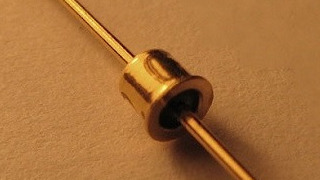
Understanding Tunnel Diodes: Negative Resistance for RF Applications
Tunnel diodes are electrical components often used in RF (radio frequency) applications where designs requiring negative resistance is needed. The most common application for these diodes are in oscillators, detectors, and amplifiers, and switching circuits where the negatove resistance property of tunnel diodes are useful. Tunnel diodes operate on the principle of Quantum Mechanical Tunneling, where electrons pass through a potential energy barrier. This gives the diode the unique property of negative resistance, where the more voltage you apply, the less current flows. It would seem it follows a negative ohms law, where I = R/V.
Key Features: Low Capacitance and High-Frequency Utility
What makes tunnel diodes special is their extremely low junction capacitance, making them useful in applications where high frequencies are used. Microwave oscillators and radar applications are sectors where the unique nature of the tunnel diode come into play.
A Look Back: Invention, Obsolescence, and Lasting Impact
The tunnel diode, however, is an old invention, being invented in 1957 by Leo Esaki and Yuriko Kurose at Tokyo Tsushin Kogyo, now known as Sony. This invention was used in specialized places in the late 20th century, however, as other semiconductor technologies improved, subsitutes for tunnel diodes also increased. Eventually, silicon semiconductor technology reached a level enough to make tunnel diodes obsolete in most of the sectors it once used to dominate. However, a lasting impact tunnel diodes left was the introduction of practical quantum mechanics for electronics, which we can now see developed as quantum computers.
The Future of Tunnel Diodes: Quantum Computing and High-Speed Circuits
The development of quantum computers actually plays a role in the future of tunnel diodes, despite their obsolescence in most sectors. Silicon based tunnel diodes are a fairly new development, and is being put to the test. The most intriguing thing about quantum tunneling in electronic components is that quantum tunneing is instant, faster than light, which is why tunnel diodes also performed so well in high speed circuits. The integration of tunnel diodes into standard semiconductor circuits could increase the speed and performance of them, reaching boundaries beyond what standard silicon semiconductors can achieve.